Digital cameras already supports the 3D shooting, now its the turn of mobiles to join the 3D bandwagon as Sharp has introduced an industry’s first HD3D camera module which will be used in Smartphones and digicams in the near future.
Sharp’s 3D Camera Module is capable of capturing videos and images in 3D and that too in 720p per eye. According to the early reports mass production of 3D camera modules will begin by the end of 2010 and you could be seeing 3D camera enabled handsets in as early as Q1 2011.
Pricing details of the 3D modules are unknown as of now.
New York Times is allegedly gearing up to begin charging online readers soon. What’s more, the change should coincide with a supposed January 27 launch of a rumored Apple tablet.
New York Times chairman Arthur Sulzberger Jr. could soon announce paid access to the newspaper’s website that draws 20 million unique online readers. The news came via a Sunday story ran in New York Magazine that quoted “people familiar with internal deliberations.” The Times is apparently considering adopting a metered system heralded by the Financial Times which gives readers a few free articles before requiring them to pay.
Sources speculated to New York Magazine that a digital New York Times edition could coincide with Apple’s rumored tablet believed to be up for an announcement January 27. The Times’ executive editor Bill Keller declined to comment and the paper’s spokesperson Diane McNulty had this to say:
We’ll announce a decision when we believe that we have crafted the best possible business approach. No details till then.
Well, what to say… Just like everyone else on the web, I too don’t like this paid content thing that News Corp’s Rupert Murdoch is pushing with the Wall Street Journal and other publications. Regardless of what you and I think of it, the publishing industry is seeking a much-needed remedy to the declining ad revenues and decreasing circulation of print products. It is now evident that online ads can’t offset a huge drop in print advertising.
That said, I have no doubt in my mind that we’ll be soon expected to make micropayments in exchange for access to high-profile online publications. On the other hand, I never thought in my wildest dreams five years ago that I’d be purchasing my music online, buying mobile apps, and renting streaming movies and TV shows.
I sure am not going to pay for web editions of the New York Times or the Wall Street Journal unless they tempt me with a low enough fee – say, a cent or two per article or up to 99 cents for access to the whole edition. But if publishers repackage printed magazines and newspapers for tablet reading and enhance this experience with multimedia, I’m willing to be charged for such content. Think digital concepts like Time, Inc.’s Sports Illustrated concept, Wired’s digital edition mock-up, Bonnier’s Mag+ prototype, or even a fan-made mockup. Unless they give me those kinds of digital print experiences on an Apple tablet, via iTunes, I won’t be sold on paying for news on the web.
Last week, Verizon Wireless announced new unlimited plans in an effort to attract additional subscribers to its network in the new year. The plans, which begin this week, include unlimited voice and voice/text plans for single and family accounts. The carrier also announced a data plan requirement for new activations of 3G multimedia phones.
The new Nationwide Unlimited Talk plan will allow subscribers to call anyone in the United States for only $69.99 a month while a Talk & Text plan is also available which adds unlimited text, picture and video messages for $89.99 a month. The new Nationwide Family Shareplans work much the same way and cost $119.99 for unlimited voice and $149.99 for unlimited messaging. The family plans include the first two lines of service.
Probably the most controversial step Verizon Wireless took last week was putting in place a requirement that all new activations of 3G multimedia phones must included a $9.99 per month data package which includes 25 megabytes. The carrier states this requirement was first introduced with the LG enV TOUCH and Samsung Rogue, but will now encompass the LG Chocolate Touch, LG enV3, LG VX8360, Motorola Entice W766, Nokia 7705 Twist and Samsung Alias 2.
I don’t know if it was good timing for Verizon Wireless to expand its data plan requirement to additional 3G multimedia phones considering the spotlight the carrier is under after bumping up its early termination fee (ETF) in conjunction with the launch of the Motorola Droid. It was just before Christmas that we reported that the FCC found Verizon’s response to the inquiry regarding the increased ETF fee alarming. The biggest concern expressed was that the logic behind ETF’s was expanding from simply covering the cost of subsidizing phones to including advertising, commissions and store costs.
It is almost like Verizon Wireless wants to give the FCC yet one more thing to bang them over the head with. There is little doubt in my mind that the FCC will find this new move troubling. I can almost hear the printers now over at the FCC printing out yet another inquiry to Verizon Wireless .
I’m sure the carrier will attempt to make the argument that the lines between 3G multimedia phones and smartphones are blurring which justifies the data plan requirement. Personally, I don’t disagree with this logical argument. Unfortunately for Verizon Wireless, they are dealing with the government. Perception trumps logic in Washington. Currently, the perception is that wireless carriers are milking subscribers for monthly fees and that the FCC or Congress will need to step in and do something about it to protect consumers.
Amazon has announced an international version of its Kindle e-book reader. Priced at US$279, the global version of the Kindle will work in over 100 countries and shares the same specs as its U.S. only counterpart - a 6" diagonal E Ink® anti-glare display, slimline 8" x 5.3" x 0.36" footprint, 2GB internal memory (1.4GB of which is available for user content - that's enough for 1,500 books) and a weight of just 10.2 ounces (0.29kg).
The Kindle charges by USB 2.0 or from a power outlet in around four hours. A full battery will deliver up to four days up-time with the wireless function switched on, and up to two weeks reading with wireless off according to Amazon.
The attraction of the Kindle is that after the initial purchase there are no mobile phone-like contracts, just the purchase price of the book (best sellers and new releases cost around US$10). It can download books by 3G or 2G networks (or via the USB connection) and can snaffle a book in under 60 seconds from the current database of over 280,000 English-language titles - though the international offering is reportedly smaller at around 200,000. Newspapers and magazines are also available for download.
The new international version uses AT&T's network in the U.S. and partner networks elsewhere.
Amazon has also dropped the price of the U.S. Kindle from US$299 to $259. The product shipped for US$359 when it was released in February, so as always, early adopters paid a premium.
The Kindle with Global Wireless ships on October 19.
Millennial Media has just published its monthly S.M.A.R.T report, or “Scorecard for Mobile Advertising Reach and Targeting,” that gives insight and stats into the mobile advertising landscape as seen from Millennial Media- a leading mobile ad network in the US.
The report focuses on user engagement, mobile presence and device use profiles with an emphasis on a new concept known as Cost Per Engaged User or CPEU. GoMo News had an excellent analysis on what CPEU entails and how Millennial Media is using it as a new business model.
GoMo characterizes CPEU as the process in which the advertisements are displayed for free, but the engagement with the advertisement is measured and billed. Instead of CPC (cost per click) or CPM (cost per thousand) the advertiser only pays depending on the interaction the user has with the advertisement.
In terms of engagement, Millennial conducted a study on users’ level of satisfaction while engaging with five different mobile activities across feature phones, smartphones, and computers. On four out of five activities, smartphones ranked anywhere from 4% to 9% higher than on a computer. Interestingly enough, while engagement via smartphones is higher than on computers, browsing the internet on a computer ranked 2% higher than on a smartphone- proving the concept of CPEU is valuable to marketers.
When it comes to devices, Apple gained additional traction in Millennial’s network and pulled within 2.48% of Samsung, the current leader. iPhone and iPod Touch impressions increased another 15% in August, and Blackberry and Samsung continued to compete for the top five mobile phone spots, as Blackberry Curve and Pearl grabbed #2 and #4. Wi-Fi aided mobile content consumption, increasing 1.26% month over month, and dominated the U.S. Carrier Mix with 26.15% impression share.
Many model mobiles are going to hit the market this month we have listed them for your knowledge to easy buy. Fly Fly E310 Attitude Term appearance: 10-15 September Approximate cost: 7 000 rubles. (from $ 280)
This model is designed as slider type with touch keys facility. Specifications apparatus typical for this class of devices – screen QVGA, 3.2 megapixel camera with autofocus, maps microSD.
LG
LG KF350 Term appearance: 20-25 September Approximate cost: 8 000 rubles. (from $ 320) We can have this mobile in two different color they are Pink and Light Blue. It features a 3 megapixel camera and QVGA screen with the availability of microSD cards. LG KS360 Term appearance: 20-25 September Approximate cost: 7000 rubles. (from $ 280) This mobile features a QWERTY type keyboard. This auto focusing mobile gives 2-megapixel camera with 2.4 inches of QVGA screen and a slot for microSD cards.
Motorola Motorola EM30 Term appearance: mid-September Approximate cost: 6500 rubles. ($ 250) This model mobile gives us the clear and high quality music with slots of 3.5mm
Nokia Nokia 7210 Supernova Term appearance: early September Approximate cost: 4800 rubles. ($ 200) Unfortunately this mobile model is not so fast while loading applications. This has been designed mainly for reducing a massive budget.
Nokia 7310 Supernova Term appearance: early September Approximate cost: 7000 rubles. (from $ 280) This mobile also provides the same performance as Nokia 7210 model other than that nothing is specifiable. This has been also designed mainly for reducing a massive budget.
Nokia 7610 Supernova Term appearance: end of September Approximate cost: 10000 rub. ($ 400) For the musical performance this mobile offers a good headset, a memory card to 1 GB kit, the best performance of the shell, screen, and support for 3G.
Nokia 2680 Slide Term appearance: mid-September Approximate cost: 3700 rubles. (from $ 160) This mobile is too cheap to buy. This is the most inexpensive model mobile from Nokia. This mobile features a normal color screen, VGA camera presence and nothing special.
Nokia 3600 Slide Term appearance: 10-15 September Approximate cost: 9000 rubles. (from $ 370) It is clear that older model by the end of the year will gradually disappear from the market, but the first time, it will compete with Nokia 3600 Slide. The reason for competition in similar characteristics, minor differences in the software, for example, maps Maps for S40 built without GPS-receivers are not needed.
Nokia 7070 Prism Term appearance: 10-15 September Approximate cost: 3000 rubles. ($ 125) This model mobile has no familiar design. This is for only low budget purchase.
Nokia 6210 Navigator Term appearance: September 5-10 Approximate cost: 15000 rub. (from $ 620) We can use this mobile for navigation purpose only. Nothing special in this mobile other than navigation and all other features are as same as earlier model handsets.
Nokia 6600 Slide Term appearance: 10-15 September Approximate cost: 12000 rub. (from $ 520) This is the most miniature model mobile from the Nokia with a tracing graceful body.
Nokia 6600 Fold Term appearance: mid-September (model was delayed with the output in August) Approximate cost: 14 000 rubles. (from $ 580) Although we have many foldable model mobiles in the market yet this is a new model mobile is going to hit the market.
Philips Philips X500 Term appearance: end of September Approximate cost: 4 000 rubles. (from $ 180) A replacement model for Philips 9 @ 9k, differs similar design, but a metal shell, support Java, minor improvements in the functions. Philips M600 Term appearance: early September Approximate cost: 4 500 rubles. ($ 200) This musical edition model mobile from Philips is quite attractive and features a good headphone, SRS WOW Surround sound and various equalizers with a slot for microSD cards. Samsung Samsung GT-S7330 Term appearance: end of August Approximate cost: 10 000 rubles. (from $ 425) Although Samsung introduced a new model mobile with this same facility it offers an attract touch screen, high quality body with 5-megapixel camera.
Samsung G400 Term appearance: September 20 Approximate cost: 15 000 rubles. (from $ 600) This can make the users to buy it immediately by its slider type chassis and attraction of the mobile.
Samsung L700 Term appearance: September 15 Approximate cost: 6 000 rubles. (from $ 230) This model has been designed to compete with Nokia 6300. This model turns good in its pleasant design and built in program office documents.
Samsung L870 Term appearance: September 15 Approximate cost: 10 000 rubles. ($ 400) This is a cheaper mobile with a number of original programs and a metal case. It features a QVGA screen and high quality music playback.
Samsung I900 WiTu Delivery in late September Approximate cost: 27 000 rubles. (from 1100 $) / 20000 rubles ($ 900) A large amount of memory for data storage, as well as RAM, a powerful platform, high-quality corps, excellent camera for Windows Mobile, at 3.5 mm adapter kit supply – agree, a good set. Enumerate pluses could be further: built accelerometer sensor illumination, partially metal body, etc.
Samsung M150 Term appearance: September 20 Approximate cost: 2600 rubles. (from $ 110) This is a budget model mobile with a VGA-camera, Bluetooth, FM-radio, a peaceful design and low price. Clear way aims to compete with budget monoblock other manufacturers. No obvious disadvantages, however, and pluses also absent. Feel you can say that the sales volume will be great.
Sony Ericsson Sony Ericsson W302 Term appearance: end of September Approximate cost: 7 000 rubles. (from $ 280) Although this is from Sony Ericsson yet it won’t satisfy the customer desires but it has something in the handset. Sony Ericsson K330 Term appearance: end of September Approximate cost: 3 000 rubles. ($ 125) This is a cheaper model mobile with Radio, added support AM-band and unfortunately without memory cards and embedded memory with 10 MB.
Unfortunately all the above models are going to hit Russian market first later they are planned to be unveiled in other countries.
What do you do when you’re sitting on a nearly endless torrent of finely-focused content and a few million bucks in venture capital? You go mobile.
That’s exactly what Glam Media, the distributed media network behind the womens lifestyle site Glam.com and its male-oriented counterpart Brash.com, is about to do. As one of the fastest growing sites on the web, its taken a bit longer for them to take on the mobile front than we would have guessed – but their quest to conquer portables begins tomorrow.
Tomorrow morning, Glam will be announcing GlamMobile, a mobile ad publishing and content platform. The new operation is finding its roots in Japan first, with plans to roll out in Europe and the U.S. shortly thereafter.
From what we’re hearing, GlamMobile will make heavy use of GlamAdapt, their re-branded version of the AdaptiveAds service they purchased in January of this year. GlamAdapt detects the user’s carrier, the device’s resolution and multimedia capabilities, then custom-tailors an ad optimized for that phone and user. Initial ad partners at launch all fall right in line with what one would expect for a fashion-focused network, ranging from Maybelline to Diesel.
The first fruits of their labor, http://m.glam.jp, will go live tomorrow morning.
Remember the Sony Ericsson Candela teaser shown by Esato board user Razec? Now the designer has finally revealed his vision, of the dual display concept phone Candela, that’s still under development. This is another XPERIA design, that’s part of the “Gametertainment Series”, a promising branding, if you ask me.
Large touchscreen display? Checked! Virtual keyboard, able to display some QWERTY hotness or a touchpad area, for you to draw at will? Checked! A nice camera at the back? Checked! (I speculate, but it might be true).
This dual display phone is a premiere, because it’s Razec’s first 3D modelled concept and we’re looking forward to see its finished version.
ATI has recently launched its newer DirectX 11 graphics card with Eyefinity technology having massive resolutions that you might have not even dreamt of until now. ATI presents the "Evergreen" GPU based on the 40nm manufacturing technology capable of delivering 11,520 x 4,800 - 55.3 megapixels on 24 screens with four cards using crossfire in a single PC, that is one hell of a resolution, a single Evergreen card can power upto six screens at any given time, you can use them as a large single display or make them to act as different units like your very own control room using the ATI control center. NVIDIA for sure have a lot of catching up to do now.
Img: Hwupgrade
This is how the upcoming Evergreen 5870 cards will look like
ATI Eyefinity will be launching soon, early Evergreen DirectX 11 cards will have support for 3 screens, later builds will include support for 6 screens and crossfire too. More coverage of the technology at links below each images.
24 screens showing resolution of 11,520 x 4,800 - 55.3 megapixels with four Evergreen cards using crossfire in a single PC
via: Hothardware
Six screens via single Evergreen DirectX 11 card using 6 DisplayPorts
. The worldwide leader in software and the world’s largest smartphone manufacturer have entered into an alliance that is set to deliver a groundbreaking, enterprise-grade solution for mobile productivity. Today, Microsoft Business Division President Stephen Elop and Nokia’s Executive Vice President for Devices Kai Oistamo announced the agreement, outlining a shared vision for the future of mobile productivity. This is the first time that either company has embarked on an alliance of this scope and nature.
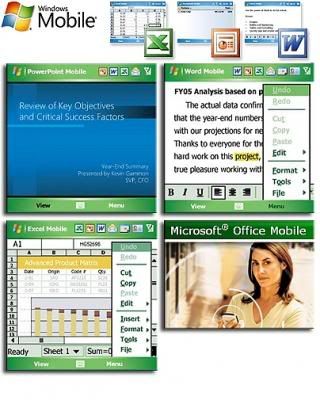
Under the terms of the agreement, the two companies will begin collaborating immediately on the design, development and marketing of productivity solutions for the mobile professional, bringing Microsoft Office Mobile and Microsoft business communications, collaboration and device management software to Nokia’s Symbian devices. These solutions will be available for a broad range of Nokia smartphones starting with the company’s business-optimized range, Nokia Eseries. The two companies will also market these solutions to businesses, carriers and individuals.
Both Microsoft Corp. and Nokia possess a rare combination of enterprise experience and consumer understanding and, in addition to the collaboration on existing software and services, will use these assets to jointly design a range of new user experiences for future Nokia devices. These experiences will be identified together, and will be created by dedicated teams inside both companies to better meet the growing needs of the mobile professional. “With more than 200 million smartphone customers globally, Nokia is the world’s largest smartphone manufacturer and a natural partner for us,”said Elop. “Today’s announcement will enable us to expand Microsoft Office Mobile to Nokia smartphone owners worldwide and allow them to collaborate on Office documents from anywhere, as part of our strategy to provide the best productivity experience across the PC, phone and browser.”
“If you are going to provide a seamless and integrated productivity experience on a mobile device, Microsoft is an ideal partner,” said Oistamo. “Together with Microsoft, we will develop new and innovative user experiences for employees of small and large businesses alike, ensuring Nokia’s smartphones are an integral part of the office and home-office environment, and addressing the significant opportunity in mobile enterprise productivity.”
This announcement builds on the existing work Nokia is doing by optimizing access to e-mail and other personal information with Exchange ActiveSync. Next year, Nokia intends to start shipping Microsoft Office Communicator Mobile on its smartphones, followed by other Office applications and related software and services in the future. These will include: - The ability to view, edit, create and share Office documents on more devices in more places with mobile-optimized versions of Microsoft Word, Microsoft PowerPoint, Microsoft Excel and Microsoft OneNote - Enterprise instant messaging and presence, and optimized conferencing and collaboration experience with Microsoft Office Communicator Mobile - Mobile access to intranet and extranet portals built on Microsoft SharePoint Server - Enterprise device management withMicrosoft System Center
“Having these two major players cooperating at this level will help us continue to meet our customer’s needs and reinforces our future business mobility strategy,”said Diane Sanchez, head of Telefonica USA.
“The scope of the alliance between Microsoft and Nokia, and potential value for the enterprise and individual is significant,” said Stephen Drake, VP of Mobility & Telecom at IDC. “By bringing Microsoft’s productivity solutions to Nokia’s large customer base, the two companies should be better able to serve the needs of the growing mobile worker population, which IDC estimates to reach 1 billion worldwide in 2011.”
Oh, you thought Bluetooth accessories made you look crazy before? Oh-hoh-hoh. You just wait, friend. You just wait.
If Bluetooth earpieces are a 4 on the “How crazy do I look?” scale, this new concept from design studio bck will rank in at somewhere around a 13. Heres the gist of it: you wear two little Bluetooth-powered rings. You put the earpiece-ring on your thumb, and the microphone-ring on your pinky. When your phone call comes in, make the standard “talking-on-the-phone” hand gesture, and bam - your hand is now your phone. And everyone thinks you’re not only talking to yourself, but talking to yourself through your hand.
This accessory would not only be ultra-portable, but it would double as a fashion accessory too. ‘The Color Rings’ design concept from bck is truly one-of-a-kind. Working together with your cellphone (via Bluetooth I would imagine), the ‘rings’ would be worn on your thumb and little finger… One ring works as the microphone, and the other is the headset. Brilliant. There would even be built-in distance sensors, allowing you to send or receive a call simply by placing your hand up to your head.
Description from the designers at bck:
The color rings are an accessory for cell phones that are inspired in the gestural language of the use of the phone. It is conceived as an extension of the hand, which makes their use a more natural one, and more comfortable and more attractive as well. The rings are thought to be either an electronic component, or a fashion accessory. They were designed to be worn in the thumb and pinkie fingers, and work as a microphone and headset, respectively. These, interconnected wirelessly with the phone, allow responding calls only by separating the fingers and speaking, using distance sensors between rings to activate the call.
I think this concept could go a long ways for all my surfer buddies…They’re busy ‘hanging loose’ anyway. Would work well, although they’d have to keep the rings away from the water And now that I think of it… I suppose this wouldn’t be a Bluetooth Headset… but rather a Bluetooth Handset? Oh my.
Not getting enough social interaction on your Nokia 5800 XpressMusic? Maybe a native Facebook app will help.
In an effort to expand its footprint on mobile devices, Facebook has just launched an S60 V5 friendly app on Nokia’s Ovi store. Status updates, wall posts, photo uploads - if it’s something you’d expect of a Facebook app, it probably has it.
AllAboutSymbian says it’s a bit lacking in the speed department - but hey, it’s free, and it’s Facebook.
Facebook ® for Nokia S60 Touch lets you keep up with your friends right at your fingertips. Update your status, see what your friends are up to, upload photos, check messages and lookup phone numbers when you need them anytime and anywhere.
Facebook allows you to comment on your friend’s statuses, RSVP to event invites and confirm or deny friend requests. The Facebook for Nokia S60 brings Facebook directly to your phone If Facebook is not available for your device, please check Ovi Store.


 New York Times is allegedly gearing up to begin charging online readers soon. What’s more, the change should coincide with a supposed January 27 launch of a rumored Apple tablet.


 Millennial Media has just published its monthly S.M.A.R.T report, or “Scorecard for Mobile Advertising Reach and Targeting,” that gives insight and stats into the mobile advertising landscape as seen from Millennial Media- a leading mobile ad network in the US.


 What do you do when you’re sitting on a nearly endless torrent of finely-focused content and a



 And now that I think of it… I suppose this wouldn’t be a Bluetooth Headset… but rather a Bluetooth Handset? Oh my.

